The Wallace Collection in London has curated an art exhibition of Winston Churchill’s paintings, borrowed from twenty-five museums and private collections and offers an incredibly rare opportunity to see so many of his paintings in one place. As I am studying history A Level and one of my topics is Britain 1930-1997, a large focus is on Winston Churchill and his time both in and out of the cabinet. I have found him to be a highly controversial figure politically, and was interested to learn more about him personally, to understand him in more depth. Therefore I went to visit the exhibition, Winston Churchill: The Painter at the Wallace Collection in London to learn about one of his great passions which was painting.
I was surprised to learn that he was such an able and accoladed painter, given that Sir Winston Churchill was the Prime Minister and wartime leader during the Second World War for Britain 1940-1945. He also later become prime minister once more in 1951-1955. Walking through the collection, the audio recording explained his challenges and how art inspired and saved him from the gravity of his job. He was often admired for his resilience and determination for victory. However, this also gave him huge amounts of stress. The beginning of his journey came from the failure of Dardanelles and Gallipoli campaign during the First World War for which he was initially held responsible. At age 40, burdened with the stress of his failures, his sister, Lady Gwendoline Bertie who was also a painter, suggested that he should pick up a brush. First he was intimidated by the blank canvas that stood before him. After his sister chaotically painted “large, fierce strokes and slashes of blue on the absolutely cowering canvas” he was immediately grabbed by the awe of the canvas. After this, painting became a lifelong passion. He talked about how painting was his therapy, as it allowed him to fully be consumed by the art, which helped managed the pressures of war and government.
Even though he was modest about his talent, he took painting very seriously and sought advice from the greatest painters such as Sir John Lavery and Sir William Nicholson to help him improve along his new journey. These painters employed different styles such as self portraits, impressionism, and still life, which were all very present in the Wallace Collection exhibit. There were still life paintings, artwork depicting grand rooms in Blenheim Palace and views from other famous historic houses, as well as more humble observations such as drinks tables features his favourite bottle of whisky, Black Label.
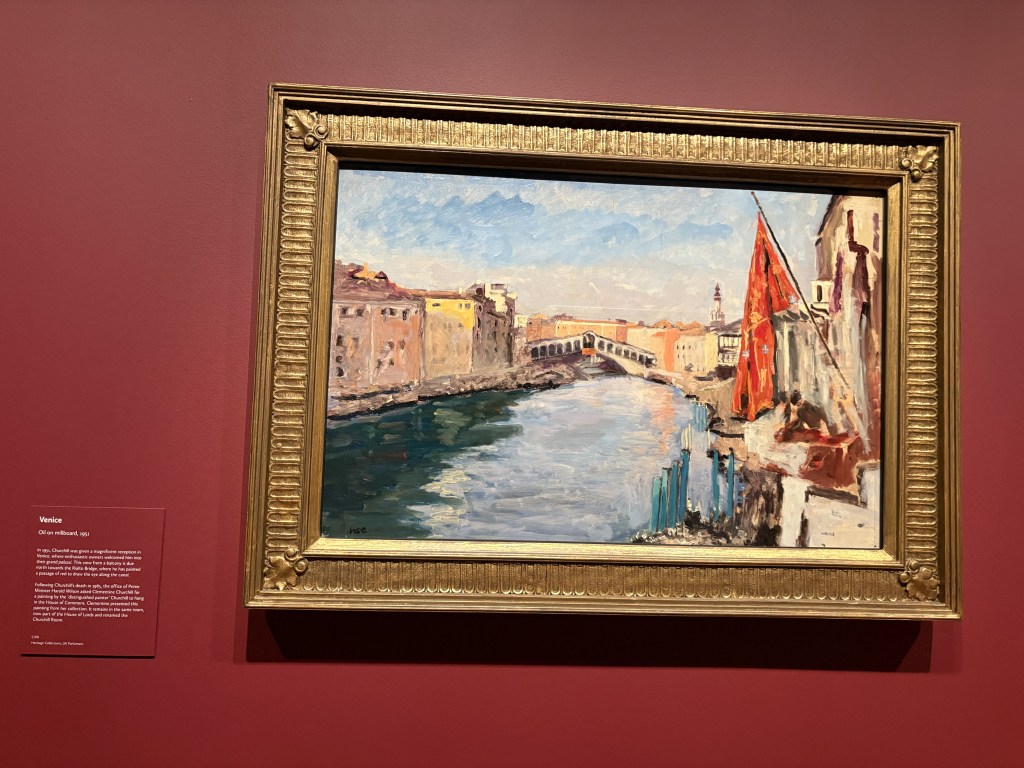
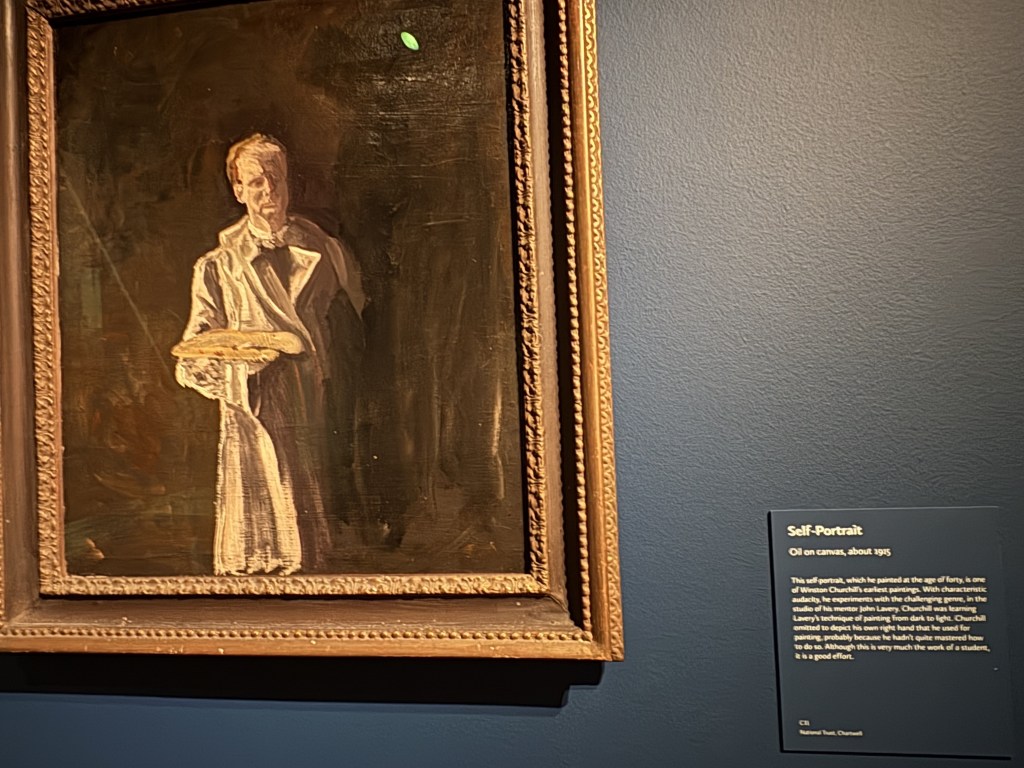
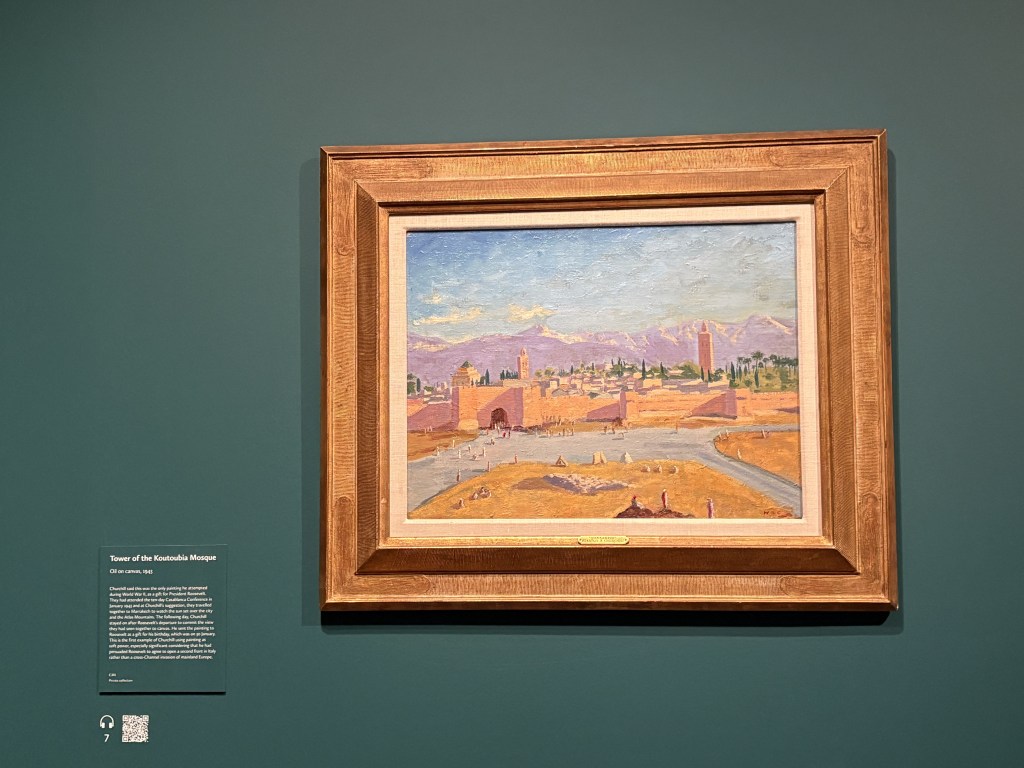
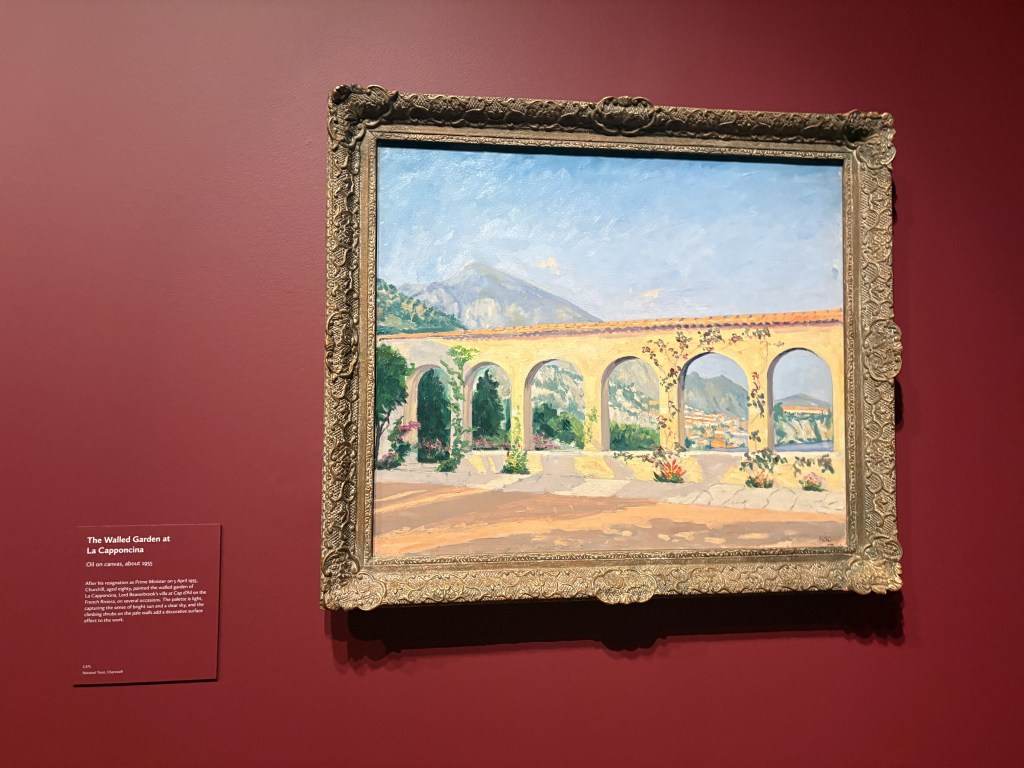
The exhibition curated by the Wallace Collection is beautiful. You could see the effort and detail to perfectly portray and capture Churchill’s paintings from the deep hues of the painted backdrop of the walls the paintings were hung on, to illuminate their vibrancy. As you walk through the different rooms in the collection, you will appreciate the variety of his styles, initially staring out with a self portrait painting entitled Self-Portrait (1915) which he learned from John Lavery. The exhibition then moved onto his still life art, inspired by his time with William Nicholson. Churchill also enjoyed painting places and objects that mean a lot to him personally. This included his home Chartwell House, the French Riviera, Jerusalem and Morocco. The final rooms displayed art inspired by these places he loved. One place where he created many paintings was in Morocco which was his favourite winter retreat. He painted 45 different paintings of this city! One of his famous paintings from Morocco exhibited in the collection is called Tower of the Koutoubia Mosque which he painted in 1943. This was the only painting he attempted during World War Two, and it was a gift for President Roosevelt’s birthday to commemorate their time together. Churchill requested that they should travel together to Marrakech to watch the sunset over the city and the Atlas Mountains, which he then proceeded to paint. It captures the beauty of the town just when the golden hour shines onto it, showcasing the majestic view of the city. This painting was the first example of Churchill using his skill as a soft power, as he had then managed to persuade Roosevelt to open a second front in Italy.
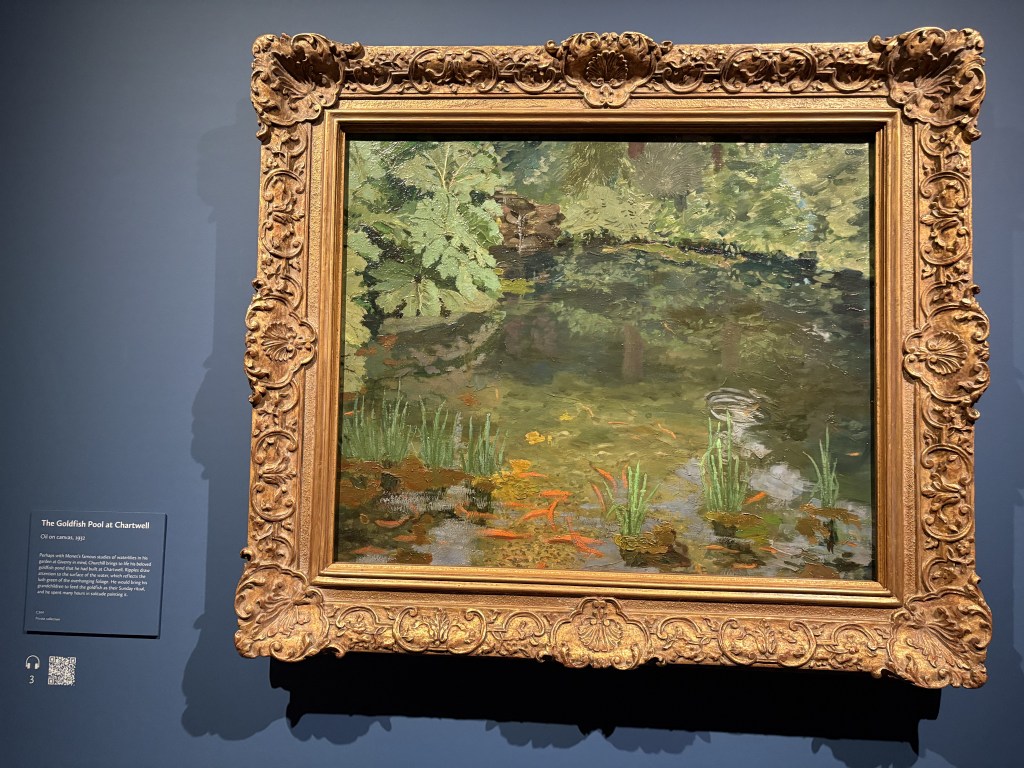
I found the paintings that Winston Churchill produced incredibly fascinating. Each one of them had their own story that was unique. I noticed how most of Churchill’s paintings were made with oil on canvas. He was most fond of oils for the joy they give him due to their flexible and forgiving nature and their vibrant colours. He even has a wooden easel produced specifically for him. One of my favourite paintings of his was The Goldfish Pool at Chartwell which he painted in 1932. Churchill used lots of different textures and vibrant colours to show his thoughts and feelings in the reflection of the pond. One of his main personal tragedies was the death of his daughter Marigold who died at the age of three months from sepsis. His grief was permanent, and I believe this particular painting portrays the idea of his survival, with little sparks of brightness trying to survive in dark, overwhelming times, through the vivid orange and red fish swimming in the murky dull-coloured pond.
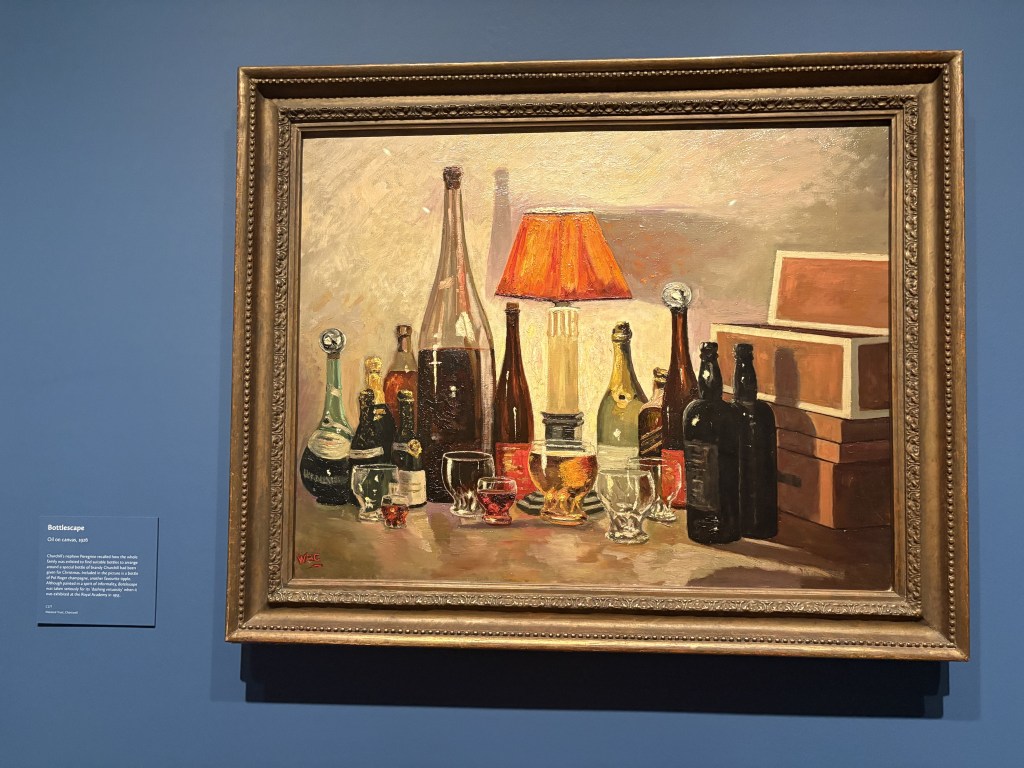
Another one of Churchill’s famous paintings is Bottlescape in 1926. Churchill played on the title of the painting Bottlescape to describe what he would paint indoors when the weather was bad, preventing him from painting his preferred outdoor and nature landscapes. The idea behind the painting was that Churchill’s nephew recalled that the whole family was made to find suitable bottle to match around a special bottle of brandy that Churchill had been given for Christmas. It was painted informally but it was soon taken seriously for its ‘dashing virtuosity’ when it was exhibited in 1955 at the Royal Academy. The painting represents Churchill’s collection of decanters, half-filled glasses and liquor bottles that are shown in warm light. It highlights his personal life, showing his fond interest in fine drinks which offer him a way of relaxing in stressful times, mainly caused by political matters and the public.
Learning more about Churchill’s personal life has helped me understand Churchill better as a person and his struggles and achievements outside of the war, notably including a diploma from the Royal Academy of Art. As he was such a commanding public figure, he was surprisingly modest about his art, and often entered competitions and won them – under a pseudonym as he did not want to receive any special treatment. This exhibition revealed a very different side to Churchill, his humility, introspection, respect for the arts and kindness as he gifted mainly of his works of art to friends.
I highly recommend the audio tour to accompany your visit which gives more insight into the inspiration behind his art and paintings. The exhibition takes about an hour and is available to visit in London until the end of November 2026. If you miss its you could also visit his permanent collection at Chartwell House his beloved home which houses the largest collections of his paintings in the world.




Leave a Reply